

We've accredited more than 40 multidisciplinary pain management units (training units) in Australia, New Zealand, Hong Kong, and Singapore to provide approved pain medicine training.
Units are accredited either as a level 1 or Practice Development Stage (PDS) unit as defined in by-law 19 and the accreditation handbook. The faculty accredits supervisors rather than units for the Procedures Endorsement Program.
Where can I train?

Find accredited pain medicine training sites in the Australian Capital Territory.

Find accredited pain medicine training sites in New South Wales.

Find accredited pain medicine training sites in Queensland.

Find accredited pain medicine training sites in South Australia.

Find accredited pain medicine training sites in Tasmania.

Find accredited pain medicine training sites in Victoria.

Find accredited pain medicine training sites in Western Australia.

Find accredited pain medicine training sites in New Zealand.

Find accredited pain medicine training sites in Hong Kong.

Find accredited pain medicine training sites in Singapore.
Apply to be an accredited training unit
Our accreditation teams assess each unit's ability to deliver our training program to the highest standard, according to the requirements in by-law 19 and the accompanying FPM accreditation handbook. Accreditation is based on information provided in a questionnaire to the unit and a qualitative accreditation review.
The Training Unit Accreditation Committee (TUAC) oversees the accreditation and monitoring processes and reports via the Training and Assessment Executive Committee (TAEC) to the FPM Board.
Units wishing to apply for accreditation should submit the relevant datasheet linked below with the required supporting documents to the faculty office.
Resources to apply to be an accredited training unit
Level one multidisciplinary training unit datasheet
This datasheet is used by units applying for accreditation. It includes four sections: practice development stage unit details; staffing and hospital overview; unit self-assessment against standards; and appendices.
Practice Development Stage (PDS) training unit datasheet
This datasheet is used by PDS units applying for accreditation. It includes four sections: Practice development stage unit details; staffing and hospital overview; unit self-assessment against standards; and appendices.
New training setting accreditation standards and procedures
The way anaesthesia and pain medicine training settings are accredited is changing.
Learn more about the changes.
Appointing Supervisors of Training (SoTs)
All accredited training units must have an appointed supervisor of training (SOT) who is a faculty fellow. These supervisors are the FPM representative with respect to training within the units and are responsible for pain medicine training at that unit.
They need to have a thorough understanding of and experience in faculty educational activities and liaise with registered trainees and hospital authorities on matters related to trainees and training, as well as with the central administration of the faculty. Their key roles are:
- Overseeing each trainee’s clinical performance and assessments completed in the workplace.
- Performing in-training assessments and training stage reviews throughout the core training stage.
- Providing a primary point of contact between the faculty; the training unit; and the trainees.|
The unit director identifies and nominates a suitable SOT to the faculty using the SOT nomination form. Nominations are then reviewed and approved by the Director of Professional Affairs, FPM Education on behalf of the Learning and Development Committee.
Flexible training unit accreditation for regional and rural settings
The faculty developed flexible accreditation options through funding provided by the Department of Health and Aged Care through the FATES program (Flexible Approach to Training in Expanded Settings) in 2024-2025 to support and grow rural training opportunities.
The faculty is committed to growing access to pain medicine training by inviting regional settings to consider how these flexible accreditation models might support their ability to provide pain medicine training.
Explore how the faculty is expanding regional and rural pain medicine access, offering flexible training options, and view the full project evaluation report.
How to make a complaint
If you've experienced or observed any inappropriate behaviour by individuals or organisations associated with ANZCA and FPM, including staff members, fellows, trainees, SIMGs, and accredited training sites, please bring it to our attention by completing this confidential online form.
All notifications received are treated as confidential unless we request your permission to the contrary.
How to submit an RRA in relation to accreditation outcomes
Accredited training units that wish to contest an accreditation outcome or decision have the opportunity to submit a reconsideration, review or appeal (RRA) in line with Regulation 30 – Reconsideration, Review and Appeal of Decisions Policy.
Requests must be lodged using the official Reconsideration, Review and Appeals form, ensuring that all required information and supporting documentation is provided within the specified timeframe outlined in the regulation.
Other pages you might be interested in
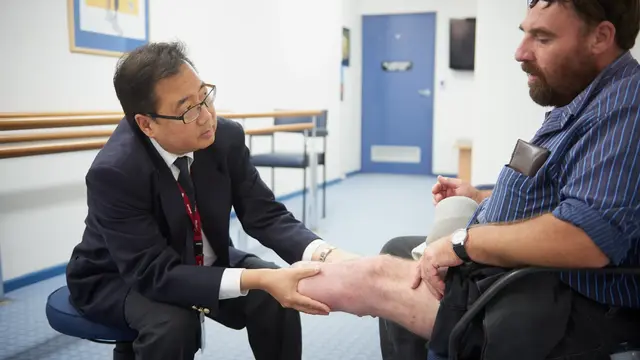
The Faculty of Pain Medicine offers a specialist training program for doctors to become pain medicine physicians, a Procedures Endorsement Program, and online training for health care providers wishing to upskill in pain management.

Expanding regional and rural pain medicine focuses on strengthening education and training pathways to build the specialist pain medicine physician workforce. By supporting learning opportunities outside major centres, we are growing capacity to deliver high-quality pain care closer to home.

The way anaesthesia and pain medicine training settings are accredited is changing.