


Overview
Rural and regional communities experience a disproportionately high burden of chronic and complex pain, with access to specialist pain services limited by workforce shortages, distance and service availability.
The Rural Pain Capability Project will initially focus on specialties where chronic, complex and recurrent pain are a common presentation in clinical practice, particularly emergency medicine and anaesthesia.
The project explores how to:
- Better support medical specialists and trainees working in rural and regional services to assess and manage pain within their existing clinical practice.
- Build chronic pain management capability within the existing rural and regional specialist workforce (rather than creating new specialist pain medicine training posts).
- Complement existing specialty training with pain management education that supports appropriate care within clinicians’ current scope of practice.
Strengthening the knowledge, skills and confidence of specialists and trainees will support more consistent, evidence-informed pain management, safer prescribing and referral pathways, improved continuity of care, and greater capacity to provide care closer to where people live.
What will the project deliver?
Is this project training future pain specialists?
Scope of the Rural Pain Capability Project
The Rural Pain Capability Project aims to strengthen chronic pain management capability within existing specialist training and clinical practice.
The project is not:
- Creating additional specialist pain medicine training positions.
- Establishing a new pathway to become a specialist pain medicine physician.
- Creating a new qualification or credential.
- Requiring clinicians to practise beyond their existing specialty scope.
Our approach
The project is being developed in consultation with:
- Rural and regional medical specialists and trainees.
- Supervisors and rural training networks.
- Rural and regional health services.
- Relevant specialist medical colleges and other stakeholders.
Consultation will help identify current pain management needs, capability gaps, barriers to education and the types of training that would be most useful in rural and regional practice.
Engagement with relevant specialist medical colleges and stakeholders will ensure any proposed capability framework complements existing curricula, accreditation requirements and specialty training pathways.
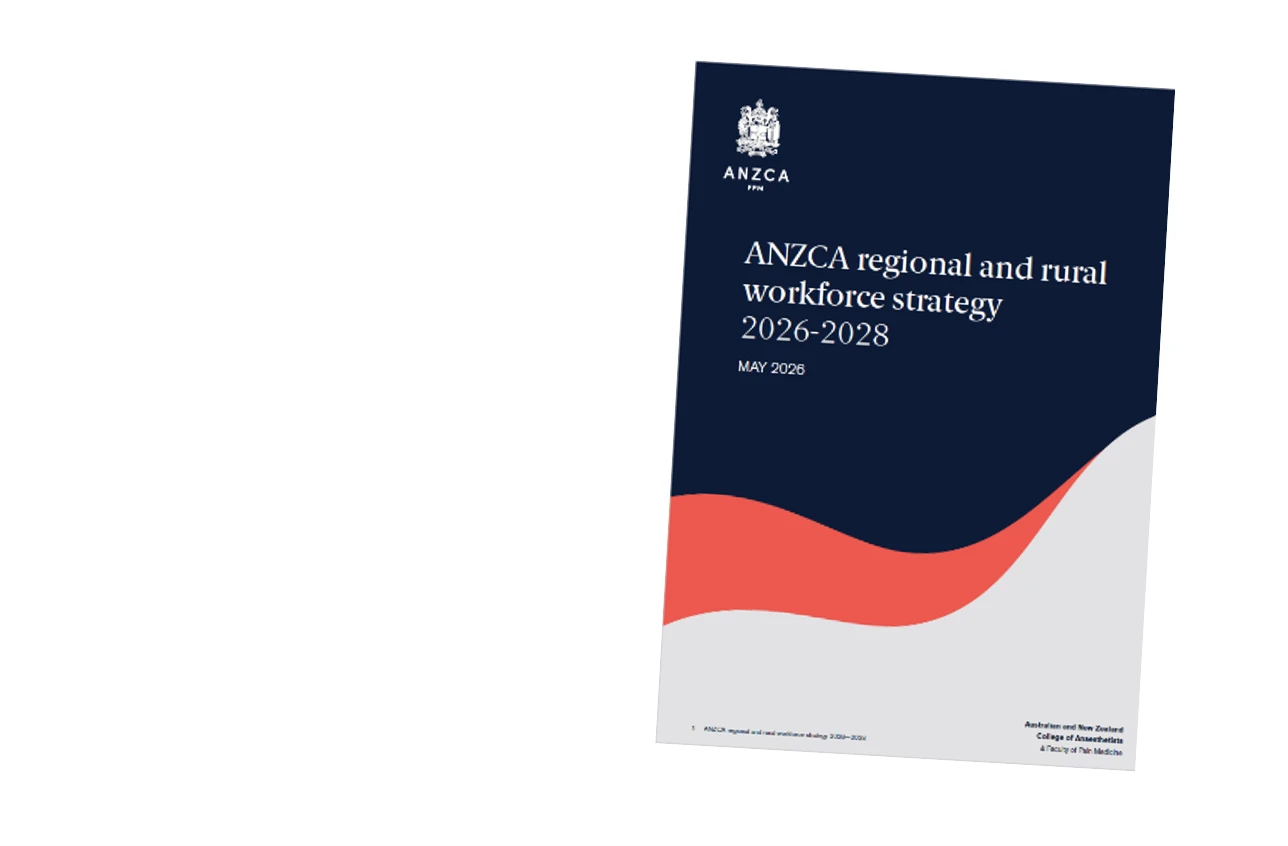
The Rural Pain Capability Project is identified as a priority area under the ANZCA Regional and Rural Workforce Strategy 2026–2028.
View the strategyProgress
The current project phase focuses on stakeholder consultation, needs assessment and co-design activities. Findings from this work will inform development of:
- A capability framework.
- An education and delivery model.
- An implementation-ready model to support future implementation planning and decision-making.
Further project updates will be published as work progresses.

Frequently asked questions
The project aims to develop a practical and scalable model to strengthen chronic pain management skills and capability among non-GP specialists in rural and regional Australia.
The project is focused on:
- Specialist medical trainees, fellows and early-career specialists working in rural and regional Australia, including clinicians in Specialist Training Program (STP)-funded training positions.
- Exploring how to better support these clinicians to assess and manage pain within their existing scope of practice, so more patients can access chronic pain management closer to where they live.
Initial consultation activities focus on emergency medicine and anaesthesia, although the project may also help inform approaches relevant to other specialties where clinicians regularly manage patients experiencing chronic, complex or recurrent pain.
Pain management capability refers to the knowledge, skills and confidence clinicians need to assess and manage chronic, complex and recurrent pain presentations within their existing scope of practice.
This includes:
- Clinical assessment and decision-making.
- Safer prescribing practices.
- Communication with patients experiencing persistent pain.
- Referral and escalation of care.
- Coordination with primary care and specialist services.
- Recognising when specialist pain medicine input is required.
The project is not intended to expand a clinician's scope of practice or create specialist pain medicine expertise outside established training pathways.
A steering group is providing oversight of the project, supported by a working group and input from stakeholders across rural and regional Australia.
The project is also reviewing existing models and approaches to identify what is working well and what could be adapted to address the identified capability gap.
If implemented, the proposed model would aim to strengthen the knowledge, skills and confidence of specialists and trainees and support more consistent, evidence-informed pain management in rural and regional settings.
The project is funded through the Australian Government's Specialist Training Program (STP) as an STP support project and will be delivered in phases through to March 2027.
Project phases include:
- Discovery and needs assessment
- Co-design and development of the education framework and delivery model.
- Model refinement and validation, and final reporting to the Australian Government.
The rural pain capability project is identified under priority area 15 of the ANZCA Regional and Rural Workforce Strategy 2026–2028, reflecting its alignment with broader college priorities to strengthen the regional and rural health workforce.
Priority area 15 outlines three potential implementation actions, including 15.2, "to define a scalable chronic pain training model for rural and regional settings that can be adapted across regions."
The rural pain capability project directly addresses this action.
What is the Specialist Training Program (STP)?
The Specialist Training Program (STP) supports specialist medical training in regional, rural, remote and private healthcare settings across Australia.
This project focuses on strengthening chronic pain management capability within clinicians who are training and practising in these environments, helping maximise the value of existing rural training investments while supporting better access to pain care closer to where people live.
Explore this section
We've answered some common questions about the Specialist Training Program.
The Operational Framework applies to the entire STP, which includes two other initiatives: the Integrated Rural Training Pipeline and the Training More Specialist Doctors in Tasmania (TMSDT).
Find all the Specialist Training program forms and guidelines you need here, including consent forms and progress reports.
The TASETN project is a connected Tasmania-wide network of simulation-based education that is strengthening workforce capability and supporting safer patient care.