
Planned system outage: A number of IT systems will be temporarily unavailable on 7 March 2026 from 10am–6pm AEDT due to scheduled maintenance. 

Full details

Planned library system outage: Access to library e-resources - including all e-books and e-journals - will be impacted by a system upgrade on Wednesday, 18 February 2026 from 8AM - 12PM AEDT / 10AM - 2PM NZDT.

Further information

The college will be closed from 2pm (AEDT) on Wednesday 24 December 2025 until Monday 5 January 2026. We wish you a happy and safe festive period.

MyPortfolio is now available via https://myportfolio.anzca.edu.au/. Please contact the ANZCA Training team at [email protected] if you have any queries or require assistance.

Meet the speakers: FPM National Pain Education Summit 2026

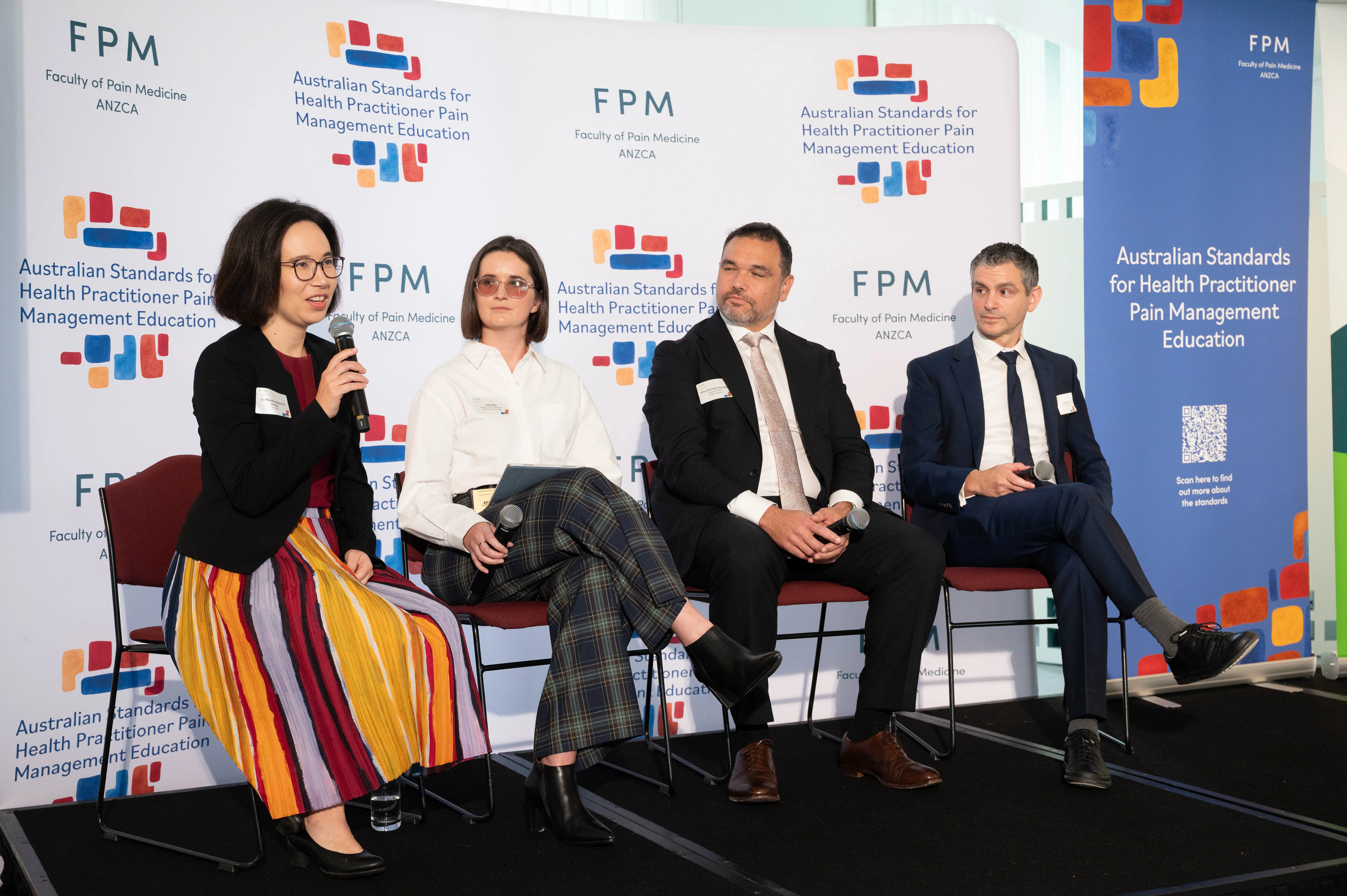
A photo of a speaking panel in front of an FPM and Education standards media wall

Overview

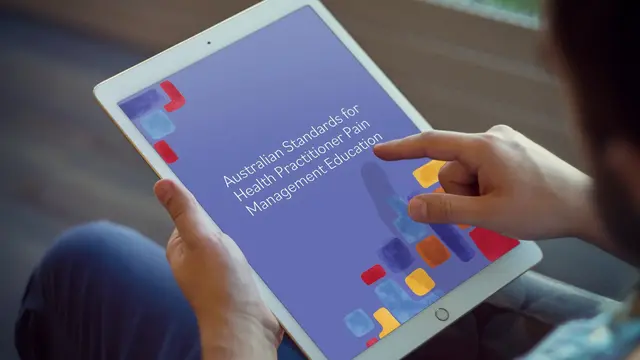
Meet the speakers joining the FPM National Pain Education Summit: From standards to practice. Learn more about the expertise and perspectives they will bring to discussions on implementing the Australian Standards for Health Practitioner Pain Management Education.

Session 1: The case for change

This opening session establishes why improving health practitioner pain education and training is a national priority.

Professor Michael Veltman was elected Faculty of Pain Medicine (FPM) Dean in 2026. He joined the FPM Board in May 2022 and served as FPM Vice-Dean from January to May 2026. A procedural pain medicine specialist, Michael brings extensive experience across perioperative medicine, acute pain services, and echocardiography. 

He is committed to strengthening pain medicine as a recognised and influential specialty, and to elevating the faculty’s role in shaping high-quality, safe, patient-centred care. Michael works as a consultant pain physician at Sir Charles Gairdner Hospital and Joondalup Health Campus, where he also serves as deputy director of medical services. He has played a significant role in establishing and leading training units across public and private healthcare settings, contributing to the development of future specialist pain medicine physicians.

Sessions: Welcome to the 2026 FPM National Pain Education Summit, Closing session: The next steps to support implementation of the standards (session 3).

Tony Garvey is a local Elder with the Wurundjeri Woi-wurrung Cultural Heritage Aboriginal Corporation. He will open the FPM National Pain Education Summit 2026 by delivering the Welcome to Country.

Session: Welcome to Country.

Dr Noam Winter is an anaesthetist, specialist pain physician and Head of Pain Services at Alfred Health. He holds qualifications in pain medicine, anaesthesia and palliative care. He also holds a senior lecturer position at Monash University. Noam has been the Faculty of Pain Medicine Board’s representative on the Australian Standards for Health Practitioner Pain Management Education project for the last three years.

Sessions: Why pain education matters, In depth: Australian Standards for Health Practitioner Pain Management Education, Cultural safety and equity in pain education introduction (session 3), Panel discussion: Putting cultural safety and equity into practice (session 3).

Professor Helen Slater is a Clinical Researcher in the Faculty of Health Sciences, Curtin University in Perth. Helen’s interests lie in making pain better. Co-leading a research group with Professor Andrew Briggs at Curtin, Helen’s focus is on capacity-building initiatives in musculoskeletal pain to strengthen health systems and re-orient health services to support people receiving ‘right’ person-centred pain care. 

Her clinical pain research and health services research is focused on the implementation of musculoskeletal models of care with a strong focus on improving young people’s pain care. The enabling role for digital technologies (eHealth, mHealth and AI) in supporting sustainable intelligent models of care is a key area of interest. Helen is heavily involved with interdisciplinary person-centred pain management training, and tertiary postgraduate pain training programs and has previously chaired the IASP Physiotherapy Curriculum Working Group. 

Session: Why pain education matters, Current and future implementation and application examples (session 2), Panel discussion: Further exploring implementation opportunities for the standards (session 2).

Ms Fiona Hodson is a senior pain management clinical nurse consultant with over 30 years of experience in multidisciplinary pain care, health service delivery, and system-level reform. She has also significantly influenced chronic pain research and policy in Australia by embedding lived experience into research and advocating for patient‑centred care. 

Through leadership roles with Chronic Pain Australia, the Australian Pain Society, and the NSW Pain Management Network, she has helped align research with consumer needs and drive policy change, including contributions to aged care reform and global work on opioid tapering. 

Fiona’s career combines advocacy, clinical expertise, and research translation to improve equity, understanding, and real‑world outcomes for people living with chronic pain. Fiona currently works as the strategy lead for endometriosis and pelvic pain clinics at the Hunter New England and Central Coast Primary Health Network.

Session: Pain lives here: The lived impact of gaps in health practitioner knowledge and skills.

Ms Kate May is a health communications advisor and chronic pain advocate based in Melbourne. Drawing on both professional and lived experience, she contributes to pain policy, research and advocacy through advisory work with the Australian Women’s Health Alliance, as a member of the FPM Research Committee, and as a Board Director and support group facilitator at Chronic Pain Australia.

Session: Lived experience panel discussion.

Dylan McBurney is a peer researcher in Murdoch Children's Research Institute's Trans Health Research Group. They have extensive experience as a lived-experience disability advocate and are an award-nominated theatre writer and performer.

Session: Lived experience panel discussion.

Ms Mikayla O’Neill is 25 years old and lives in regional Victoria and with rheumatoid arthritis. She is a lived-experience advocate with a strong focus on chronic pain and musculoskeletal health. Having lived with juvenile arthritis since childhood and later rheumatoid arthritis, she brings extensive personal experience of navigating chronic pain, complex treatment, hospital admissions and multiple surgeries. Mikayla’s lived experience has shaped a deep understanding of the physical, emotional and social impacts of living with chronic illness.

For more than five years, she has contributed to peer support, consumer advocacy, co-design, research and awareness initiatives, working alongside people with lived experience, health professionals and organisations to improve the way chronic pain and illness are understood and supported. 

She is passionate about elevating lived experience, challenging misconceptions about invisible illness and ensuring the voices of people living with chronic conditions meaningfully influence healthcare, research, policy and service design.

Session: Lived experience panel discussion.

Ms Sylvia Reynolds is a Gooniyandi woman with cultural ties to the greater Kimberley region. Sylvia is a person with lived experience of chronic pain. She is also an Aboriginal health practitioner who has recently joined The Royal Flying Doctors Service to provide culturally responsive care in remote Aboriginal communities in the Northern Territory.

Sessions: Lived experience panel discussion, Panel discussion: Putting cultural safety and equity into practice (session 3).

Session 2: From standards to implementation

This session shows participants how to translate the standards into practical action across curricula, training programs, clinical supervision and workforce education.

Dr Irina Hollington was elected FPM Vice-Dean in 2026, initially joining the FPM Board in May 2024. She works as a consultant pain medicine physician and anaesthetist at the Royal Adelaide Hospital and The Queen Elizabeth Hospital, where she also serves as Head of the Central Adelaide Local Health Network Pain Management Unit. She brings extensive experience across chronic pain medicine, anaesthesia, and outreach services in rural and remote communities. 

Irina trained in anaesthesia, intensive care, and chronic pain medicine in Germany, Switzerland, and Australia. Her clinical interests include chronic spinal, pelvic, and abdominal pain, as well as improving access to high-quality pain services for regional and remote populations. She also specialises in anaesthesia for general, colorectal, and spinal surgery.

A passionate educator, Irina is committed to training the next generation of clinicians and regularly teaches across the Australian and New Zealand College of Anaesthetists, FPM, and Royal Australasian College of Surgeons’ courses. She values multidisciplinary collaboration and delivers evidence-based care to improve patient outcomes and quality of life.

Sessions: From standards to implementation introduction, Closing reflections.

Professor Emily Haesler is an Adjunct Professor at Curtin University with joint appointments at La Trobe University and Australian National University School of Medicine. Emily is a GRADE-certified methodologist and ISO-trained accreditor, whose work involves developing national and international clinical guidelines, evidence summaries, clinical and education standards and consensus documents. 

Emily’s research areas cover methodology, consumer engagement, reflective practice, staff-family relationships, dementia care, wound care, medical education and doctor wellbeing. She has a lead role in accrediting medical education and training programs and has worked with the FPM project team on the development and dissemination of the Australian Standards for Health Practitioner Pain Management Education over the last three years. 

Sessions: Introducing the audit tool for organisations and individual health educators, Panel discussion: Further exploring implementation opportunities for the standards, Why the focus on cultural safety and equity within the standards? (session 3), Panel discussion: Putting cultural safety and equity into practice (session 3).

Ms Ellen Webber is General Manager, Education at the Australian Physiotherapy Association (APA), where she leads the organisation’s education portfolio across professional development, career pathways, credentialling, specialist training and the Australian College of Physiotherapists. She is a senior leader in health professions education with more than 25 years’ experience across professional associations, specialist medical colleges and the not-for-profit sector. 

Before joining the APA, Ellen held senior education roles at the Australian and New Zealand College of Anaesthetists, Cancer Council Victoria and the Royal Australasian College of Surgeons. Across these roles, she has led work spanning curriculum reform, continuing professional development, assessment and credentialling, new program development, accreditation and education governance. 

Ellen also holds a Master of Clinical Education and has a strong interest in learner-centred design, system-level education reform and lifelong professional learning that supports workforce capability and high-quality care for the communities the profession serves.

Sessions: Current and future implementation and application examples, Panel discussion: Further exploring implementation opportunities for the standards.

Dr Phoebe Holdenson Kimura is a medical advisor at the Australian Commission on Safety and Quality in Healthcare (ACSQHC). She is a GP at the Hornsby-Brooklyn GP Unit in Sydney and is a senior lecturer in the General Practice Clinical School at the University of Sydney. 

She has teaching and research interests in mental health, medical education, professionalism, and practitioner wellbeing. Phoebe has been the ACSQHC’s representative on the Governance Advisory Group for the Australian Standards for Health Practitioner Pain Management Education for the last three years.

Sessions: Current and future implementation and application examples, Panel discussion: Further exploring implementation opportunities for the standards.

Dr Tim Austin is a specialist pain physiotherapist, working in primary and secondary healthcare in Sydney.

Tim has been principal physiotherapist at Camperdown Physiotherapy since 1994. A significant proportion of his work is in an inter-disciplinary team with the Inner West and Western Suburbs Pain Centres. Tim completed a masters degree in pain with honours in 2007 and is currently a lecturer on that degree programme through the University of Sydney. He has served as national chair of the Australian Physiotherapy Association Pain Group (2021-2024) and the Board of the Australian Pain Society (2015-2021).

Tim has a passion for the application of inter-disciplinary care in primary and secondary care. He is regularly asked to present lectures and workshops on pain and its management. In 2021, Tim had the honour to become the first specialist pain physiotherapist in Australia. Tim has been the Australian Physiotherapy Association’s representative on the Governance Advisory Group for the Australian Standards for Health Practitioner Pain Management Education for the last three years.

Session: Panel discussion: Further exploring implementation opportunities for the standards.

Professor Cylie Williams is a podiatrist, clinical researcher, educator and the deputy head of the School of Primary and Allied Health Care at Monash University, Melbourne. She has extensive clinical experience in all health care settings, with a particular focus on paediatric lower limb conditions and is the chief investigator of the “Kids Leg Pain” Medical Research Future Funded (MRFF) research program.

Session: Panel discussion: Further exploring implementation opportunities for the standards.

Dr Laura Prendergast is the president-elect of the Australian Pain Society and a senior health psychologist with 15 years' experience in persistent pain management across public health and insurance settings in Victoria. She works within multidisciplinary pain services at Northern Health, including the Women's Health Hub Pelvic Pain Service, and provides advice to claims teams and clinicians through the Transport Accident Commission Clinical Panel. 

Laura has a strong interest in psychologically-informed pain care and is committed to advancing pain care at a systems and policy level through collaboration with key stakeholders across Australia.

Session: Panel discussion: Further exploring implementation opportunities for the standards.

Session 3: Cultural safety and equity in pain education

This dedicated session positions cultural safety and equity as core requirements of contemporary pain education, rather than additional or optional topics.

Associate Professor Michael Reynolds is a Wiradjuri man, physiotherapist and academic at Australian Catholic University (ACU). Michael is deputy head of the School of Allied Health NSW at Australian Catholic University (ACU) and is the First Nations curriculum and pedagogy lead for the physiotherapy program. Michael has been closely involved with the Australian Physiotherapy Association with their reconciliation efforts and is the current board chair at the Australian Physiotherapy Council. 

He has also been the Indigenous Allied Health Australia representative on the Governance Advisory Group for the Australian Standards for Health Practitioner Pain Management Education project for the last three years.

Sessions: What cultural safety means for Aboriginal and Torres Strait Islander peoples, Panel discussion: Putting cultural safety and equity into practice.

Over the past decade, Priyanka has advanced health equity for multicultural communities through national advocacy, program leadership and systems-level reform. In her current role as Executive Director of the Australian Multicultural Health Collaborative, she leads national strategies to address systemic racism and health inequities, shape federal policy, and elevate multicultural voices through partnerships, governance structures and the National Multicultural Health and Wellbeing Conference. 

In previous roles, she has strengthened access to chronic disease care across low-resource settings, influenced major policy reforms in India and African countries, and delivered evidence-based advocacy that improved outcomes for disadvantaged and under-represented communities. 

Sessions: What cultural safety means for Aboriginal and Torres Strait Islander peoples, Panel discussion: Putting cultural safety and equity into practice.

Dr. Brooke Conley is a proud Ngiyampaa woman, physiotherapist, and national leader in Aboriginal and Torres Strait Islander pain research. She holds a Vice-Chancellor’s Indigenous Senior Research Fellowship at RMIT University and is a visiting physiotherapist at the Victorian Aboriginal Health Service. Her research focuses on improving chronic pain care and outcomes for Aboriginal and Torres Strait Islander Peoples, with a particular emphasis on education and culturally safe care. 

Dr. Conley contributes to nine national and state-wide Indigenous and physiotherapy leadership roles across health research and education and has been recognised with eight awards for her leadership and contributions to the field.

Session: Panel discussion: Putting cultural safety and equity into practice.